
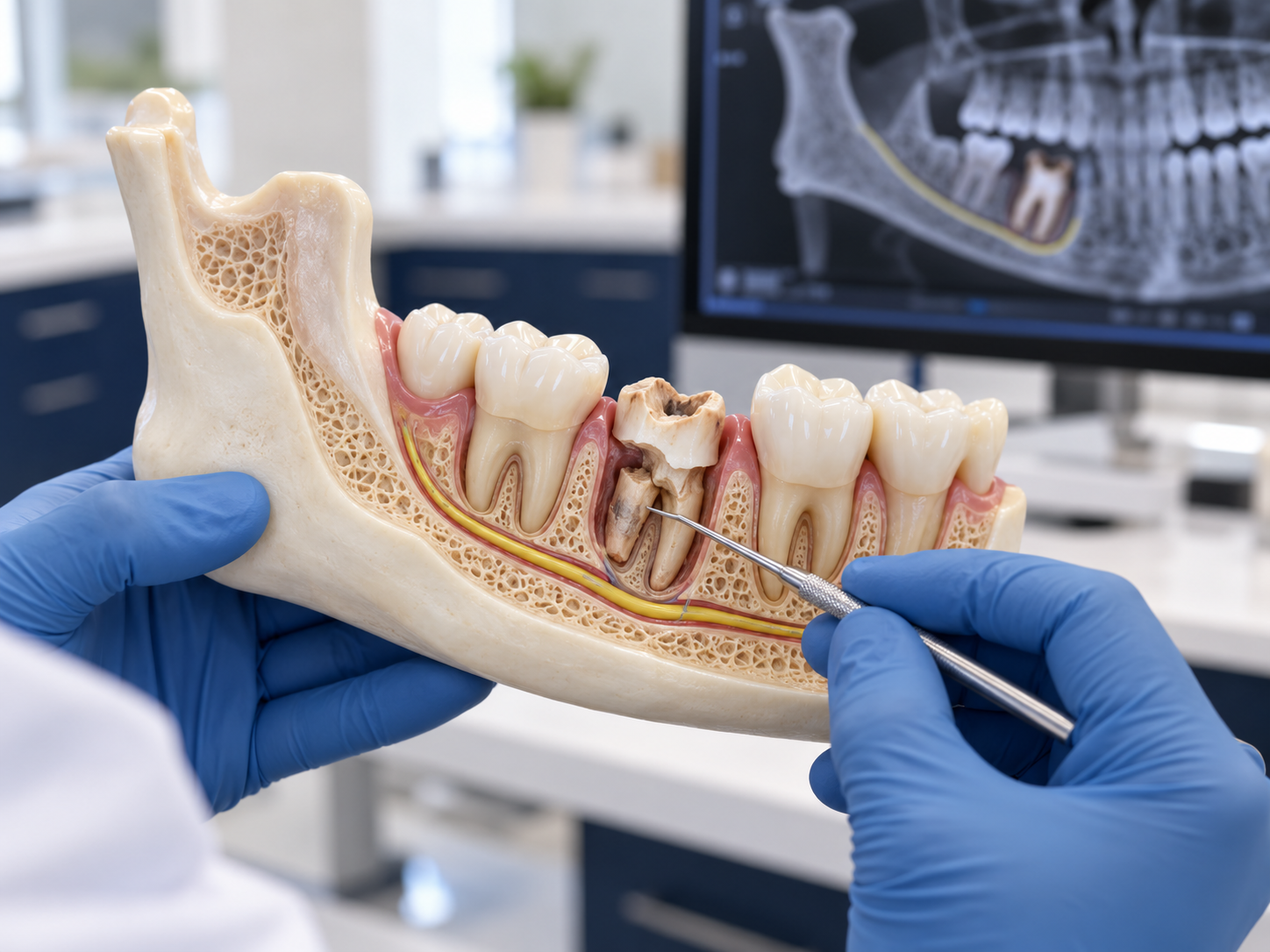
Teeth Extractions in Charleston, South Carolina
Careful, surgeon-led treatment for damaged, infected, and difficult-to-remove teeth
Extractions
When a tooth cannot be predictably saved, removing it may be the best way to relieve discomfort, control infection, and protect your oral health.
At Storie Oral Surgery, board-certified oral and maxillofacial surgeon Dr. John Quincy Storie provides personalized tooth extractions for patients throughout Charleston and the surrounding Lowcountry.
Whether you need one damaged tooth removed, treatment for a complicated infection, or a surgical extraction planned around future tooth replacement, our team will explain each step and help you feel prepared.
Preserving a natural tooth is generally preferred whenever it can be restored successfully. However, an extraction may be recommended when a tooth is too damaged, infected, unstable, or poorly positioned to remain healthy.
Common reasons for tooth removal include:
• Severe decay that cannot be predictably repaired
• A cracked or broken tooth extending below the gumline
• Advanced gum disease with significant bone loss
• Dental infection that cannot be resolved with restorative treatment
• A failed root canal or recurrent infection
• A retained root or tooth fragment
• A tooth damaged by facial or dental trauma
• An impacted, blocked, or improperly positioned tooth
• Overcrowding related to an orthodontic treatment plan
• Preparation for dentures, dental implants, or another restorative procedure
Dr. Storie evaluates the tooth, surrounding bone, nearby teeth, and relevant anatomical structures before recommending removal. If another treatment may allow the tooth to be saved, that should be discussed with your general dentist or appropriate dental specialist.

When Is a Tooth Extraction Necessary?
Signs You Should Have a Tooth Evaluated
A damaged or infected tooth does not always need to be extracted, but it should be evaluated promptly. Contact a dental professional if you experience:
• Persistent or worsening tooth pain
• Pain when biting or chewing
• Swelling of the gums, jaw, or face
• A broken tooth or exposed root
• Drainage, pus, or an unpleasant taste
• A loose permanent tooth
• Fever accompanied by dental pain or swelling
• A recurring bump or sore on the gums
• Difficulty opening your mouth normally
Severe facial swelling, difficulty breathing or swallowing, confusion, or rapidly worsening symptoms may require emergency medical attention. Call 911 or seek immediate care for a life-threatening emergency.
Simple and Surgical Tooth Extractions
The right approach depends on the condition and position of the tooth, the shape of its roots, the amount of surrounding bone, and your overall health.
Simple Tooth Extraction
A simple extraction may be appropriate when the tooth is fully visible above the gumline and can be removed without exposing additional bone. After the area is thoroughly numbed, the tooth is carefully loosened and removed.
Surgical Tooth Extraction
A surgical extraction may be needed when a tooth is broken near the gumline, covered by gum or bone, impacted, unusually positioned, or otherwise difficult to access. Dr. Storie may make a small incision, remove a limited amount of surrounding bone, or divide the tooth into sections so it can be removed as carefully as possible. Sutures may be placed when indicated.
Multiple Tooth Extractions
When several teeth require removal, treatment is coordinated around your health, comfort, restorative plan, and recovery needs. Dr. Storie can work with your general dentist, prosthodontist, or restorative team to help prepare for dentures, dental implants, or another planned treatment.
Retained Roots and Complicated Teeth
Some teeth leave behind fractured roots or are positioned near important nerves, sinuses, neighboring teeth, or existing dental work. These cases require thoughtful imaging and surgical planning. Dr. Storie will explain the benefits, limitations, and potential risks of treatment based on your anatomy.
What to Expect During the Tooth Extraction Process
1. Consultation and Examination
Dr. Storie reviews your symptoms, health history, medications, and diagnostic images. You will receive a clear explanation of why removal has been recommended and whether the extraction is expected to be simple or surgical.
2. Personalized Treatment Plan
Our team discusses anesthesia, preparation instructions, potential bone grafting, expected recovery, and any plans for replacing the tooth. You will have an opportunity to ask questions before treatment.
3. Tooth Removal
The area is anesthetized and your comfort is monitored throughout the procedure. Dr. Storie uses the approach appropriate for the condition and position of the tooth while working to protect nearby tissue and anatomical structures.
4. Aftercare and Follow-Up
You will receive instructions for managing bleeding, swelling, diet, medications, oral hygiene, and activity. Follow-up care is arranged when needed, and our team is available if questions arise during recovery.
Recovery After a Tooth Extraction
Light bleeding, tenderness, swelling, and jaw soreness can be normal after an extraction. The amount and duration vary depending on the tooth removed, the complexity of the procedure, your health, and your body's healing response.
General recovery guidance may include:
• Bite on gauze exactly as instructed to help control bleeding
• Rest and avoid strenuous activity during the initial recovery period
• Use cold packs as directed to help manage swelling
• Take prescribed or recommended medications exactly as instructed
• Choose soft foods and drink plenty of fluids
• Do not use straws during the early healing period
• Avoid smoking, vaping, and tobacco while the site heals
• Clean your mouth carefully without disturbing the blood clot
• Follow all personalized instructions from Dr. Storie
The blood clot that forms in the socket protects the underlying bone and supports healing. Disturbing that clot can contribute to a painful condition known as dry socket.
Contact the office if bleeding does not slow with the recommended measures, pain or swelling becomes worse instead of better, you develop a fever or drainage, or you have another concerning symptom. Call 911 for difficulty breathing, difficulty swallowing, or another life-threatening emergency.
Request a Tooth Extraction Consultation in Charleston, SC
If you have a painful, infected, broken, or difficult-to-remove tooth, you deserve a clear plan and attentive surgical care. Dr. Storie will evaluate the problem, explain your treatment options, and coordinate the next step with your dentist when appropriate.
Contact Storie Oral Surgery to request a tooth extraction consultation in Charleston, South Carolina.