
Expose-and-Bond in Charleston, South Carolina
Coordinated surgical and orthodontic care to help guide an impacted tooth into position
Expose-and-Bond
When a permanent tooth does not erupt normally, removing it is not always the only option. Expose-and-bond surgery uncovers an impacted tooth and places a small orthodontic attachment so the tooth can be guided gradually into the dental arch.
At Storie Oral Surgery, board-certified oral and maxillofacial surgeon Dr. John Quincy Storie works closely with your orthodontist to plan treatment around the position of the tooth, the available space, nearby roots, and your long-term bite.
The goal is to provide careful surgical access while supporting the orthodontic plan for your natural tooth.
What Is an Expose-and-Bond Procedure?
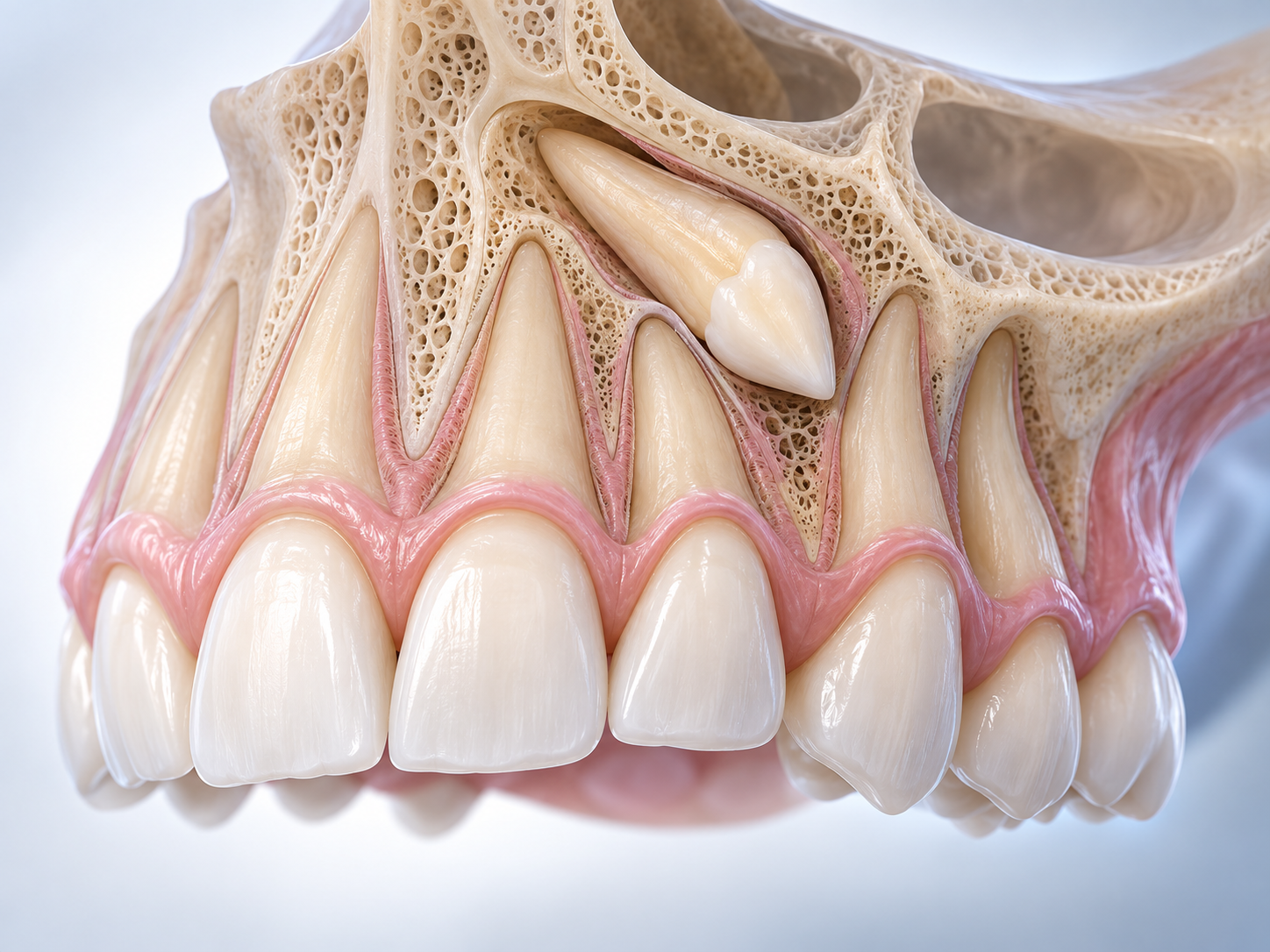
An impacted tooth is a tooth that remains partly or completely trapped beneath the gum or bone instead of erupting into its expected position. Upper canine teeth—sometimes called eye teeth—are among the permanent teeth most commonly treated with an expose-and-bond procedure, although other teeth can also become impacted.
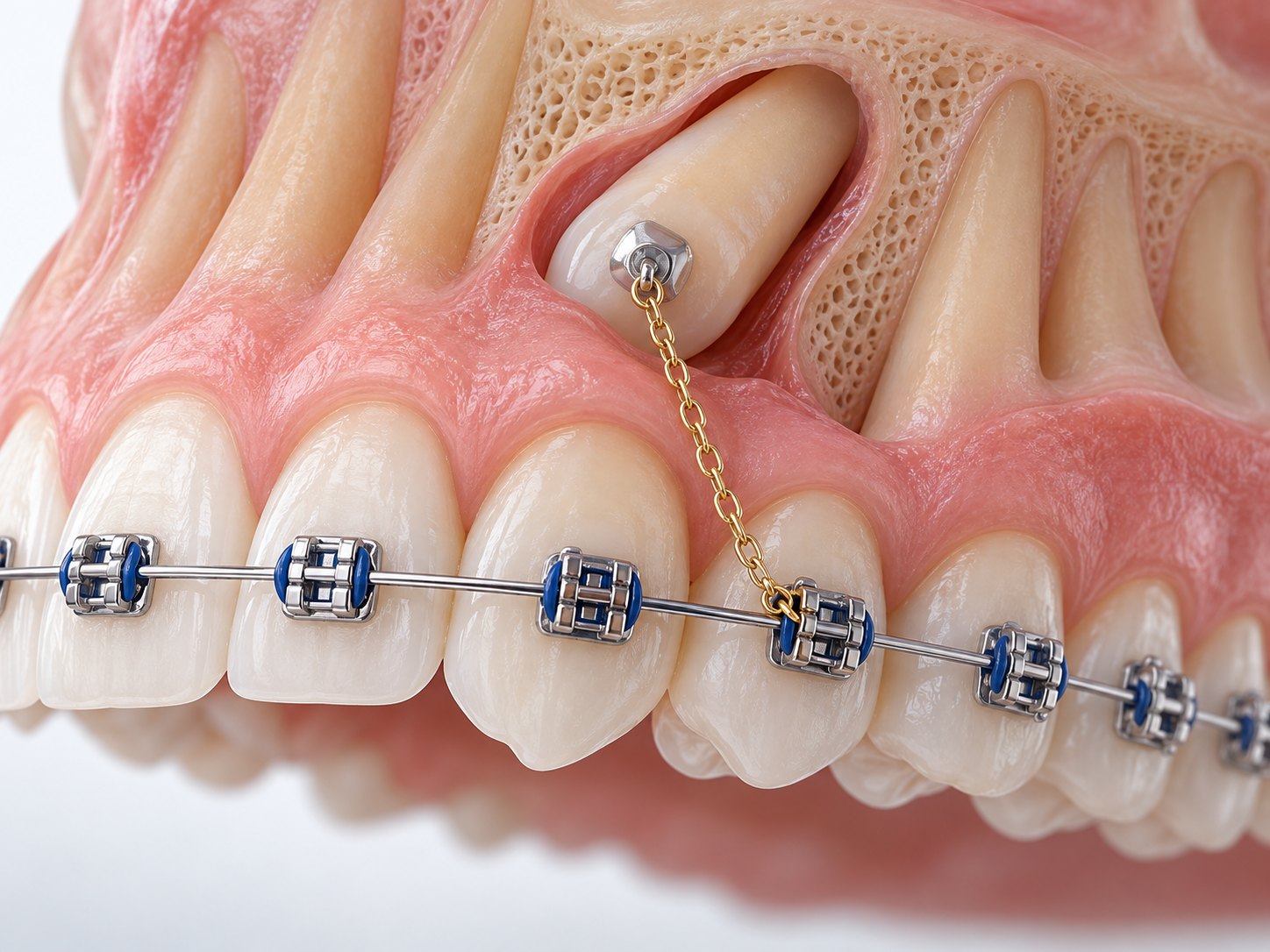
During surgery, Dr. Storie creates access to the impacted tooth by gently moving the gum tissue and, when necessary, removing a limited amount of overlying bone. A small orthodontic bracket or button is bonded to the tooth. A fine chain or similar attachment connects the tooth to the orthodontic appliance.
After initial healing, your orthodontist applies controlled traction to the attachment. Over time, this gentle force encourages the tooth to move toward its planned position. Treatment is a partnership: Dr. Storie performs the surgical exposure and attachment placement, while your orthodontist creates space and manages the tooth’s movement.
Not every impacted tooth can or should be brought into the arch. The recommendation depends on the tooth’s angle and depth, root development, available space, gum tissue, neighboring teeth, and the overall orthodontic plan.
Why Do Teeth Become Impacted?
A permanent tooth may not erupt normally when there is not enough room in the dental arch or when another tooth, dense bone, gum tissue, or an unusual eruption path blocks its movement. Genetics, retained baby teeth, extra teeth, cysts, trauma, and differences in jaw development can also contribute.
An impacted tooth may cause no obvious symptoms and may be discovered on an orthodontic X-ray. In other cases, patients or parents may notice that a permanent tooth is late to appear, a baby tooth remains longer than expected, teeth are shifting, or a firm prominence can be felt beneath the gum.
Early evaluation can be helpful because the position of the impacted tooth and the development of nearby roots may affect the available treatment options. Dr. Storie uses a clinical examination and appropriate diagnostic imaging to understand the anatomy before recommending surgery.
Expose-and-Bond Treatment at Storie Oral Surgery
Impacted Canine Exposure
Upper canine teeth play an important role in the appearance and function of the smile. When a canine remains beneath the gum or bone, Dr. Storie can carefully expose the tooth so it can be incorporated into the orthodontic treatment plan.
The surgical approach is selected according to whether the canine lies toward the palate or the cheek, how deeply it is positioned, and how close it is to the roots of neighboring teeth. The objective is to create appropriate access while protecting nearby structures and preserving healthy tissue whenever possible.
Orthodontic Attachment and Chain Placement
Once the impacted tooth is accessible, a small orthodontic attachment is bonded to its surface. A delicate chain or connector is secured to the patient’s orthodontic appliance so the orthodontist can guide the tooth after healing begins.
The attachment is positioned to support the planned direction of movement. Dr. Storie confirms that it is secure before completing the procedure. The chain may remain visible near the gumline or be protected beneath the tissue, depending on the surgical approach and orthodontic plan.
Coordinated Surgical and Orthodontic Guidance
Expose-and-bond care depends on communication between the oral surgeon and orthodontist. Before surgery, the orthodontist usually creates adequate space for the impacted tooth and identifies the desired path of movement. Dr. Storie then plans the exposure and attachment position to complement that path.
After the surgical site begins to heal, the orthodontist activates the attachment and adjusts the force at follow-up visits. Movement is gradual and the timeline varies considerably. Regular orthodontic monitoring helps the team evaluate the tooth’s response and make adjustments when needed.
Complex or Multiple Impacted Teeth
Some patients have more than one impacted tooth or a tooth located close to adjacent roots, the nasal cavity, the sinus, or other important structures. These cases may require three-dimensional imaging and a highly individualized surgical plan.
Dr. Storie evaluates the position of each tooth, the health of the surrounding teeth and bone, and the orthodontist’s intended movement before discussing treatment. In some circumstances, exposing and guiding the tooth may not offer a predictable or appropriate path. If another approach should be considered, Dr. Storie will explain the findings, limitations, and available options.
Open Versus Closed Exposure
Expose-and-bond surgery may use an open-eruption or closed-eruption technique. These terms describe how the gum tissue is managed around the impacted tooth.
With an open exposure, the surgeon creates access and leaves a small portion of the tooth visible through the gum. An orthodontic attachment may be placed during surgery or after the area heals, depending on the plan.
With a closed exposure, the orthodontic attachment and chain are placed during surgery and the gum tissue is repositioned over the tooth. The chain exits through a small opening so the orthodontist can apply traction.
One method is not universally better than the other. Dr. Storie selects the approach in coordination with the orthodontist based on the tooth’s location, the surrounding gum tissue, the desired eruption path, and other anatomical considerations.
Who May Need Expose-and-Bond Surgery?
An orthodontist or dentist may recommend an oral-surgery consultation when:
A permanent canine or another tooth has not erupted as expected
Imaging shows that a tooth is trapped beneath the gum or bone
A retained baby tooth is preventing or masking normal eruption
Orthodontic treatment has created space, but the tooth is not moving into the arch
The impacted tooth is positioned near the roots of neighboring teeth
An orthodontic plan includes guiding the patient’s natural tooth into position
Some impacted teeth can be monitored, encouraged to erupt after space is created, or treated in another way. Others may need removal rather than exposure. A consultation allows Dr. Storie to review the anatomy and explain whether expose-and-bond surgery is suitable for your situation.
The Expose-and-Bond Treatment Process
1. Orthodontic Planning and Space Creation
Your orthodontist evaluates the bite, confirms that the impacted tooth is a candidate for guided eruption, and usually creates enough room in the arch for the tooth. Braces or another orthodontic appliance may be placed before surgery.
2. Oral-Surgery Consultation and Imaging
Dr. Storie reviews your dental and medical history, examines the mouth, and studies the available imaging. Additional imaging may be recommended when a three-dimensional view would help clarify the tooth’s location and its relationship to nearby roots or other structures.
He also discusses the surgical approach, anesthesia options, expected recovery, possible limitations, and the timing of follow-up with your orthodontist.
3. Surgical Exposure and Bonding
The treatment area is thoroughly numbed. Dr. Storie creates access to the impacted tooth, bonds the orthodontic attachment, and positions the chain according to the coordinated treatment plan. The gum tissue is then managed using the selected open or closed technique. Sutures may be placed when indicated.
4. Healing and Orthodontic Activation
You will receive written aftercare instructions and return for follow-up as directed. Your orthodontist typically begins or resumes traction after an appropriate healing period. The tooth is moved gradually through a series of orthodontic adjustments rather than pulled into place at one time.
Recovery After Expose-and-Bond Surgery
Swelling, tenderness, minor bleeding, and temporary jaw stiffness are common after oral surgery. These effects are generally most noticeable during the first few days and then begin to improve. The amount of discomfort and recovery time varies with the tooth’s position, the surgical approach, and the individual patient.
Dr. Storie’s team will provide instructions for:
Managing swelling and discomfort
Protecting the surgical site and orthodontic attachment
Choosing soft foods during early healing
Brushing and keeping the mouth clean
Using prescribed or recommended medications
Returning to school, work, exercise, and normal activity
Knowing when to contact the office
Avoid pulling, twisting, or playing with the exposed chain. If the attachment or chain appears loose, breaks, or causes significant irritation, contact the oral-surgery office and your orthodontist for guidance. Do not attempt to reconnect or adjust it yourself.
The surgical site may heal well before the impacted tooth reaches its intended position. Orthodontic movement commonly takes months and varies according to the tooth’s location, the distance it must travel, the patient’s biology, and the way the tooth responds to traction.
Schedule an Expose-and-Bond Consultation in Charleston, SC
If your orthodontist has recommended surgical exposure of an impacted canine or another permanent tooth, Storie Oral Surgery can evaluate the tooth and coordinate the next stage of care. Dr. John Quincy Storie will review the imaging, explain the surgical approach, and work with your orthodontist to support a thoughtful treatment plan.