
Bone Grafting in Charleston, South Carolina
Rebuilding a stronger foundation for dental implants and long-term oral health
Bone Grafting
Healthy jawbone provides essential support for your teeth and dental implants. When bone has been lost after an extraction, infection, gum disease, trauma, or years of missing teeth, bone grafting may help preserve or rebuild the area for future treatment.
At Storie Oral Surgery, board-certified oral and maxillofacial surgeon Dr. John Quincy Storie provides personalized bone grafting in Charleston, South Carolina.
Every treatment plan begins with a careful evaluation of your anatomy, health history, diagnostic images, and restorative goals. The objective is not simply to add bone—it is to create the appropriate foundation for the tooth replacement or oral rehabilitation planned for you.
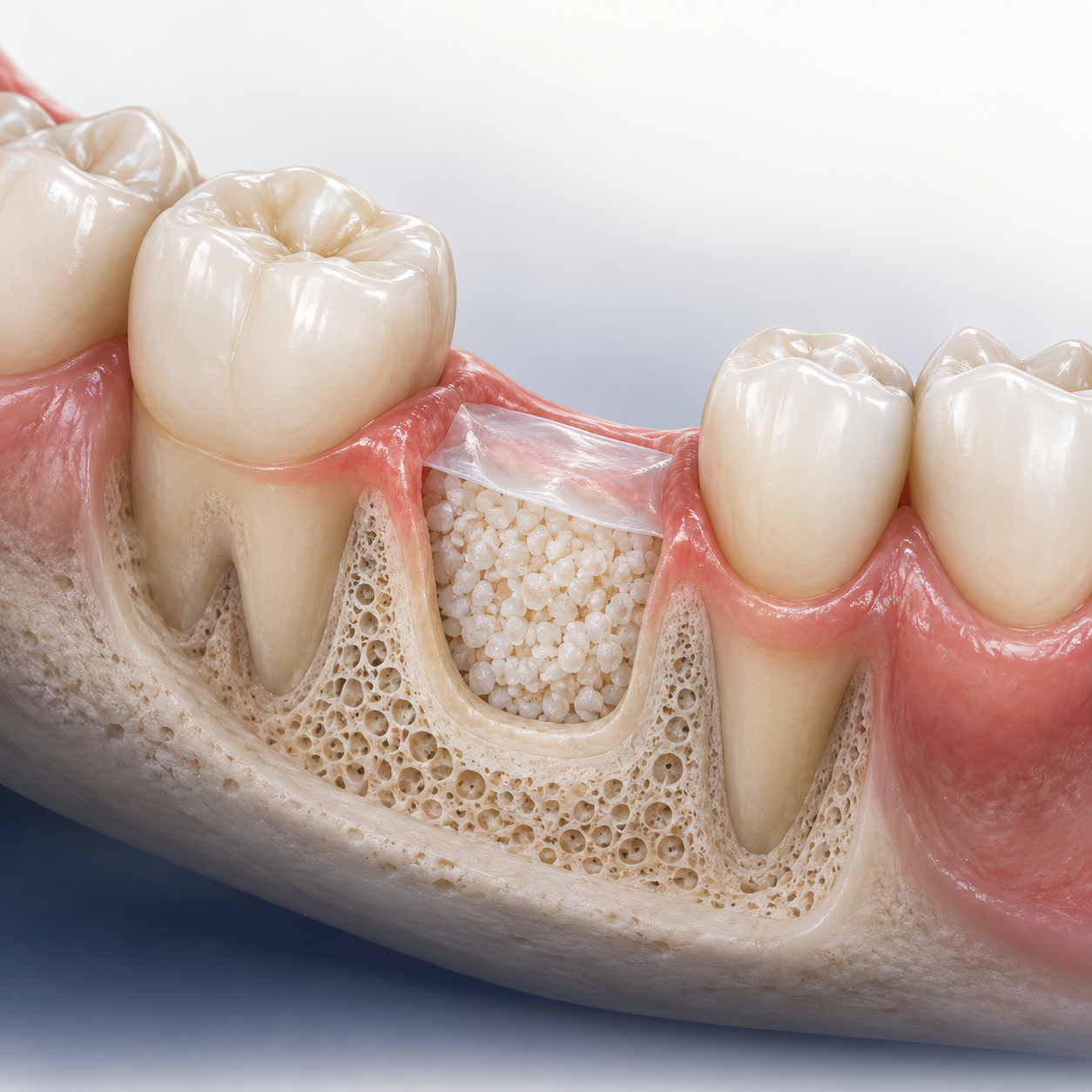
Dental bone grafting is a surgical procedure used to preserve or rebuild bone in the jaw. Bone-grafting material is placed in an area where the jaw has lost volume or where additional support may be needed for a dental implant.
The graft acts as a framework that supports the body's natural healing process. Over time, new bone can develop within and around the grafted area. The amount of reconstruction required and the healing timeline vary according to the size and location of the defect, the grafting method, your health, and the treatment the site must eventually support.
Not every patient with a missing tooth needs bone grafting. Dr. Storie will recommend it only when an examination and appropriate imaging indicate that preserving or rebuilding the site may improve your treatment options.
What Is Dental Bone Grafting?
Why Does Jawbone Loss Occur?
Jawbone is living tissue that responds to the presence and function of teeth. After a tooth is lost or removed, the surrounding bone can gradually change in height, width, and contour.
Bone loss may be associated with:
•A tooth extraction or long-standing missing tooth
• Dental infection or an abscess
• Advanced periodontal disease
• Trauma to the tooth or jaw
• A cyst, tumor, or previous surgical procedure
• Developmental anatomy or naturally limited bone volume
• Expansion of the maxillary sinus above the upper back teeth
• Previous dental implant complications
The location and pattern of bone loss determine which type of grafting procedure may be appropriate.
Bone Grafting Treatment Options
Socket Preservation After an Extraction
After a tooth is removed, the empty socket begins to heal and remodel. Socket preservation involves placing bone-grafting material into the extraction site to help maintain the area's shape and dimensions while it heals.
This procedure may be recommended when a dental implant is planned for the future or when preserving the ridge contour could support later restorative treatment. Socket preservation does not prevent every change in the bone, but it may reduce the amount of collapse that can occur after tooth removal.
Ridge Augmentation
The alveolar ridge is the portion of the jaw that supports the teeth. When this ridge becomes too narrow, too low, or irregular, ridge augmentation may be used to rebuild its width, height, or contour.
Dr. Storie may recommend ridge augmentation when bone loss has occurred over time or when an implant site requires more substantial reconstruction than socket preservation can provide. Depending on the anatomy and treatment plan, implant placement may occur at the same visit or after the grafted area has healed.
Sinus Augmentation
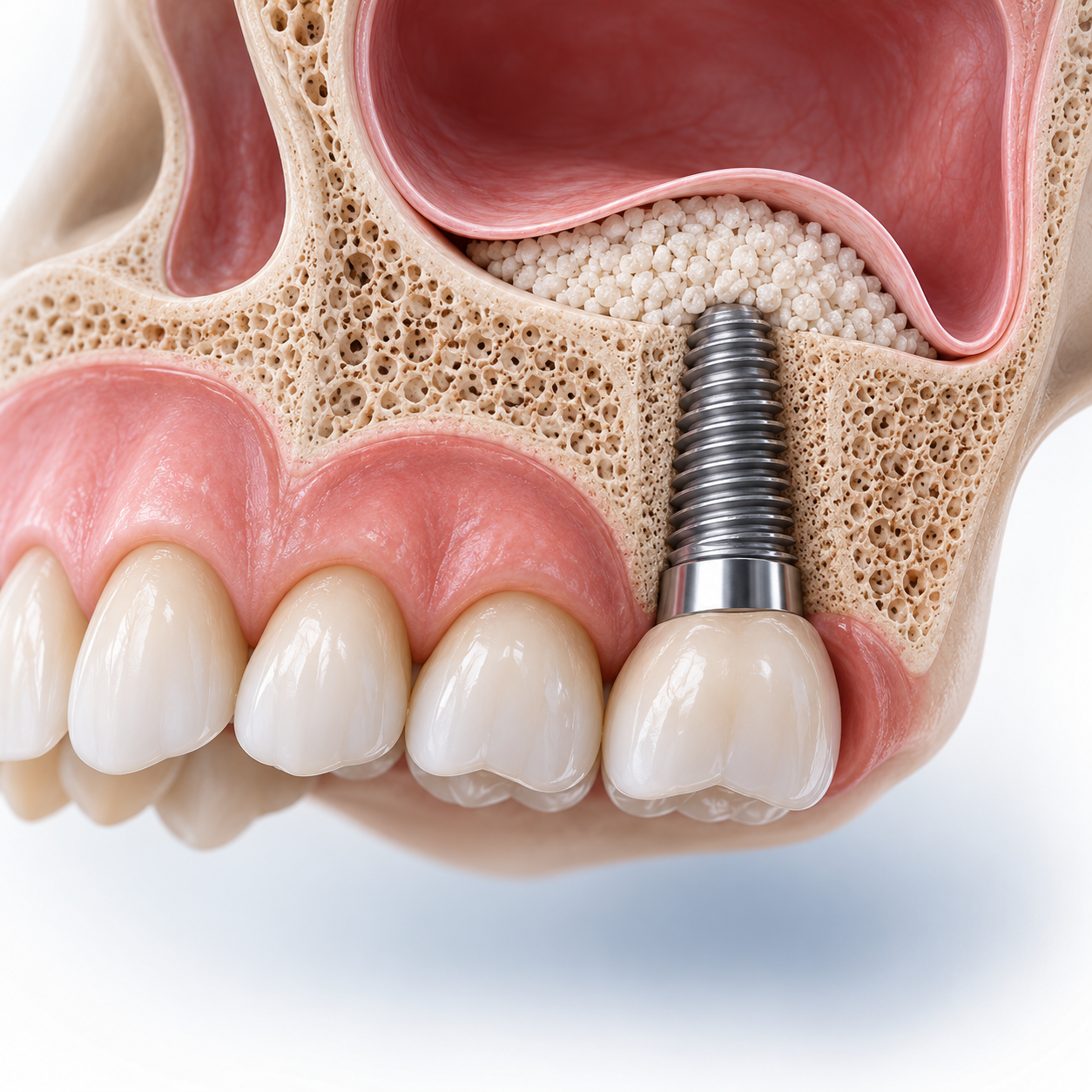
The maxillary sinuses are air-filled spaces located above the upper back teeth. After those teeth are lost, the available bone beneath the sinus may be too shallow to support an implant.
Sinus augmentation—also called a sinus lift or sinus graft—adds bone beneath the sinus lining to create additional support in the upper back jaw. A detailed examination and appropriate imaging help Dr. Storie evaluate the sinus, remaining bone height, and implant plan before recommending treatment.
In some cases, an implant can be placed at the same time as the sinus graft. In others, the graft should heal first. The sequence depends on the amount and quality of existing bone and the ability to achieve appropriate implant stability.
Bone Grafting for Complex Implant Sites
Some implant sites have irregular or more advanced bone loss related to infection, trauma, previous procedures, or long-standing tooth loss. These areas may require a more individualized grafting approach to rebuild the missing contour or protect important structures.
Dr. Storie evaluates the size and shape of the defect, nearby teeth, gum tissue, nerves, sinuses, and planned restoration before selecting the surgical approach. More complex cases may require staged treatment and additional healing before an implant can be placed.
Bone Grafting for Dental Implants
Dental implants depend on an appropriate volume and quality of bone for support. Bone grafting may be used before an implant, at the time of extraction, or during implant placement depending on the condition of the site.
The implant and grafting plan should also account for the final crown, bridge, or full-arch restoration. At Storie Oral Surgery, Dr. Storie can coordinate with your general dentist, prosthodontist, or restorative dentist so the surgical foundation is planned around the replacement teeth it will support.
For patients receiving complete upper-arch, lower-arch, or full-mouth treatment through Doctors Implants Charleston, any grafting needs are considered within the coordinated surgical and restorative plan. Dr. Storie performs the surgical phase as part of the Doctors Implants team.
What Type of Bone-Grafting Material Is Used?
Bone-grafting materials can come from different sources. Depending on the procedure and your needs, a graft may involve bone collected from another area of your own body, processed human donor material, animal-derived material, synthetic material, or a combination of materials.
Each option has different characteristics and clinical uses. Dr. Storie will explain the recommended material, why it is appropriate for your case, and whether a membrane or other supporting material will be used to help protect the graft during healing.
The Bone Grafting Process
1. Consultation and Diagnostic Imaging
Dr. Storie reviews your dental and medical history, medications, previous procedures, symptoms, and treatment goals. Diagnostic images are used when appropriate to evaluate bone dimensions and nearby structures such as tooth roots, nerves, and sinuses.
2. Personalized Surgical Planning
The graft is planned according to the location and extent of bone loss and the restoration the site may eventually support. Dr. Storie will explain whether grafting can be combined with an extraction or implant placement or whether a staged approach is recommended.
3. Bone Graft Placement
The area is thoroughly numbed, and appropriate sedation options may be discussed based on the procedure and your health history. Dr. Storie prepares the site, places the selected grafting material, and may use a protective membrane or sutures when indicated.
4. Healing and Follow-Up
The grafted area needs time to heal and develop a stable foundation. Follow-up visits allow Dr. Storie to monitor healing and determine when the site may be ready for the next stage of treatment.
Recovery After a Dental Bone Graft
Some swelling, soreness, bruising, or minor bleeding may occur after bone-grafting surgery. The amount of discomfort and recovery time vary according to the type and extent of grafting performed.
Before you leave, the Storie Oral Surgery team will provide instructions covering:
Managing swelling and discomfort
Prescribed and over-the-counter medications
Eating and hydration
Oral hygiene near the grafted area
Activity restrictions
Care of sutures or a protective membrane
Symptoms that should prompt a call to the office
The timing of follow-up visits
The surgical site may feel better before the bone has fully healed. It is important to follow activity, diet, hygiene, and follow-up instructions even after the initial soreness improves.
Request a Bone Grafting Consultation in Charleston, SC
If you have been told you do not have enough bone for a dental implant, need an extraction, or want to understand how to preserve your future treatment options, schedule an evaluation with Dr. John Storie.
Storie Oral Surgery provides personalized bone grafting and implant-site preparation for patients throughout Charleston and the surrounding Lowcountry.